It's Older Than You Think: A Brief History of Crochet
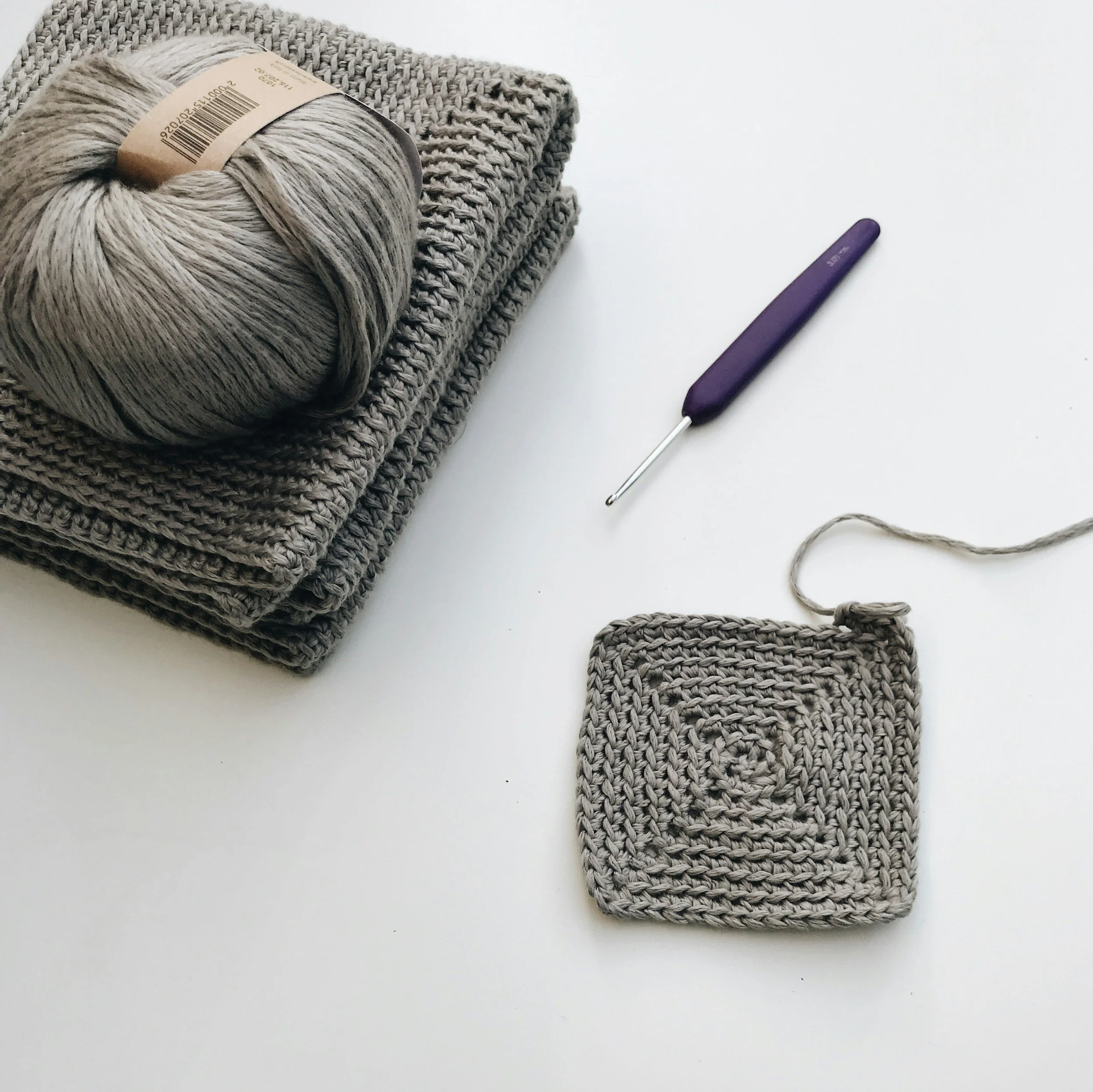
This post is a little different. I have always loved history, I mean, I became a history teacher after all, and I love to learn about where things come from. Why do they exist? How did we get here? So I decided to take a look at the history of crochet.
Nobody Actually Knows Where It Started
Here's the truth: historians aren't entirely sure where or when crochet originated. The craft doesn't have one clear birthplace; it likely developed across multiple cultures over many centuries. Some researchers trace its roots to ancient needlework traditions in China, Persia, and North Africa. Others point to a technique called "shepherd's knitting" practiced in Denmark, or tambour embroidery that made its way from China to Europe through trade routes.[1] [2]
The word "crochet" itself comes from the French word croche (or croc), meaning hook; which makes sense, since the hook is kind of the whole point. There's also a possible connection to the Norse word krokr, also meaning hook. So we've got multiple continents, multiple languages, and multiple centuries all pointing to one little hooked tool. Pretty neat if you ask me.[3]
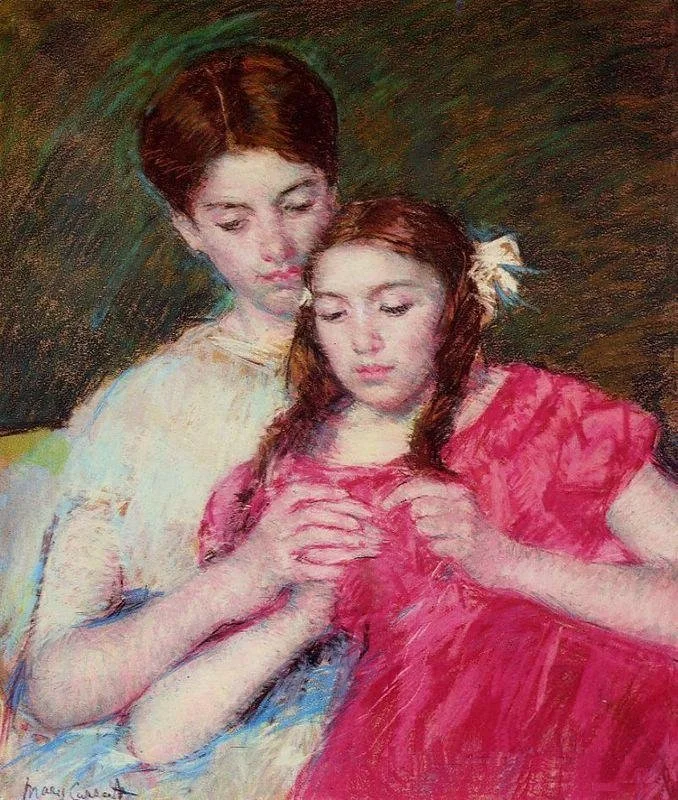
Source: "The Crochet Lesson" by Mary Cassatt, 1913. Public domain via Wikimedia Commons."
The 1800s: Crochet Finds Its Footing in Europe
The earliest known published crochet pattern appeared in a Dutch magazine called Penélopé in 1823. From there, things picked up quickly; by the 1830s, patterns were being published in Germany and the Netherlands, and the word "crochet" showed up in an English knitting book in 1837. The craft was officially on the map.[4] [2]
One name worth knowing: Mademoiselle Riego de la Branchardière, the daughter of a French father and an Irish mother. She published one of the earliest crochet pattern books and is often credited as a founding figure of Irish crochet style. She's sometimes called the "Mother of Crochet”.[3]
During the Great Irish Famine of the 1840s and 1850s, Irish women developed a distinctive style of crochet lace to sell and earn income for their families. The intricate, floral patterns became incredibly sought after across Europe. Queen Victoria herself commissioned Irish crochet lace, which put the craft firmly in the spotlight. Crochet, in a very real sense, helped sustain communities through one of history's most devastating famines.[5] [6]

Source: "Crochet needle case, Scotland, ca. 1880–1900. Public domain via Wikimedia Commons / The Metropolitan Museum of Art."
Victorian Era: Crochet for Everyone
By the mid-to-late 1800s, crochet had become a fashionable pastime for women across all social classes in Victorian England. Pattern books spread the craft widely, and for the first time, crochet wasn't just for the wealthy; it was accessible to anyone. Women crocheted decorative edging, delicate lace collars, doilies, and household linens. It was both practical and pretty.[8]
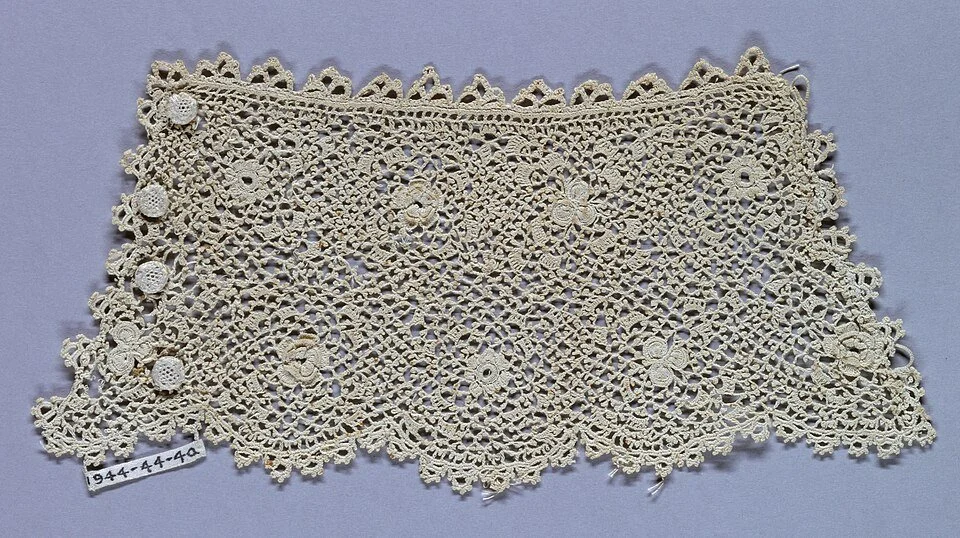
Source: Cuffs (Ireland), 19th century Public Domain via Wikimedia Commons
The 20th Century: From Wartime Necessity to Hippie Chic
Crochet carried right into the 1900s, shifting roles depending on the era. In the early 20th century, it was primarily used for accessories and small embellishments. By the 1920s and 1930s, it had worked its way into full fashion; think crocheted cloche hats and evening gowns.[6]
Then came World War II, and crochet took on a whole new purpose. Women crocheted hats, scarves, and warm accessories for soldiers overseas. Crochet served as an act of love and service.[6] The National World War II Museum has a site dedicated to the Knit Your Bit Patterns (these patterns also included crochet). Check it out here.
And then the 1960s and 70s happened. Granny squares, bold colors, ponchos, vests, and an explosion of bohemian style made crochet THE craft of the counterculture movement. It was handmade, expressive, and a little bit rebellious. In 1917, the Boye Needle Company manufactured the first American crochet hooks, and by the 1970s, DIY kits and patterns were everywhere. Crochet was officially a household hobby.[4][7]
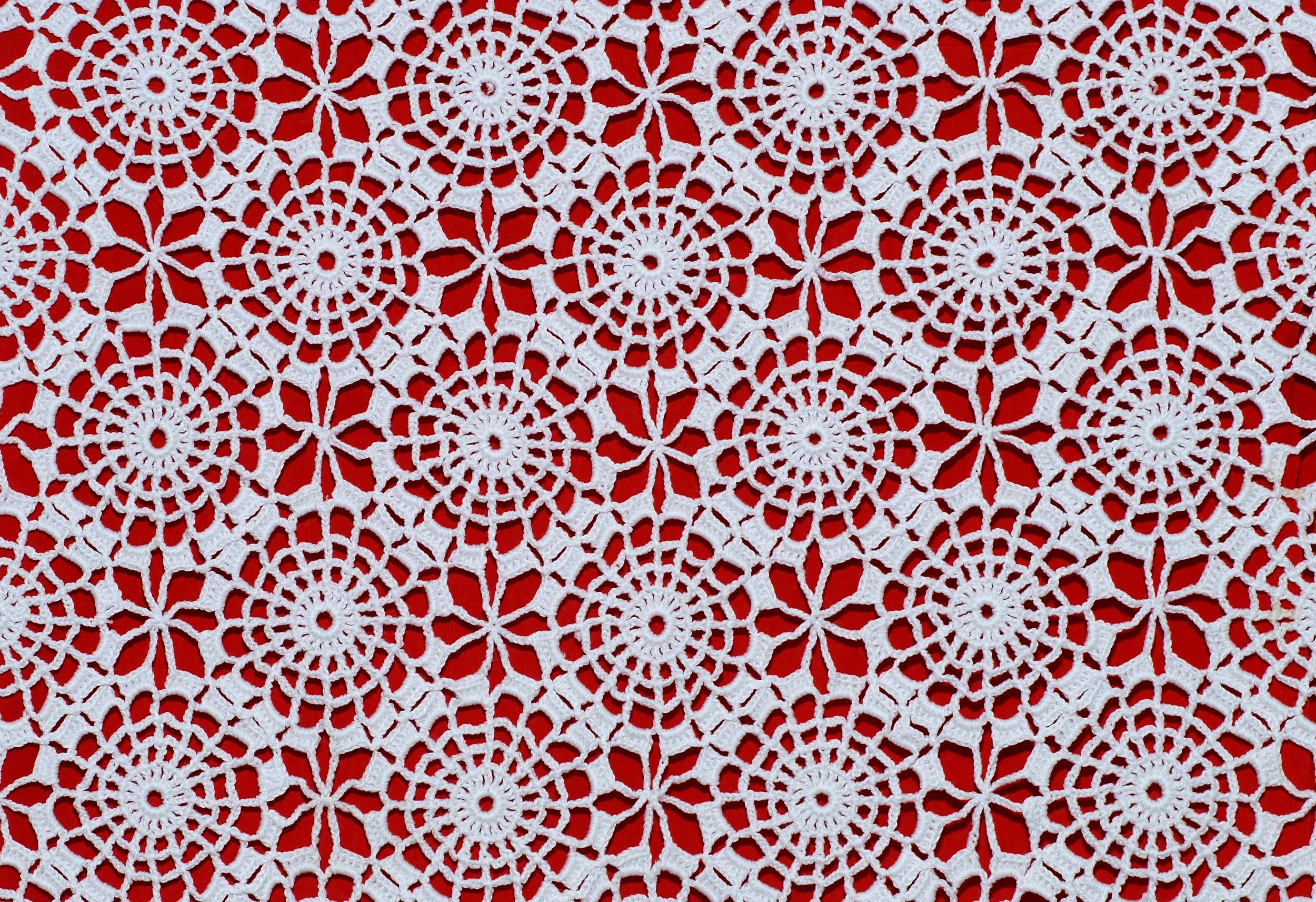
Source: Crochet tablecloth, 1970s, Portugal. Public domain via Wikimedia Commons.
Today: Crochet is Having a Moment (Again)
Crochet dipped a little in the 1980s and 90s; mass production had made handmade things feel less necessary, but the craft never really went away. And in recent years, it's absolutely thriving.[5]
Social media changed everything. Platforms like YouTube, Instagram, Pinterest, and Etsy have created a global community of crocheters who share patterns, tutorials, and finished projects. High-fashion designers have brought crochet to the runway. The amigurumi movement (crocheted stuffed animals and toys) has taken off. And more people than ever are picking up a hook for the first time.[7]
What I love most about this moment is that crochet is no longer seen as just a "grandma" craft. It's creative. It's meditative. It's sustainable. It's art. And it connects us to a long, long line of people, across continents and centuries, who also found something meaningful in a hook and a skein of yarn.
And Here We Are
Thousands of years of human creativity, and somehow all of it wound up in your living room (or, you know, wherever you sneak in your crochet time). Whether you're working on something simple or something intricate, you're participating in a tradition that spans cultures, continents, and centuries.
That's pretty special.
Passing It On
Here's what strikes me most after going down this rabbit hole of crochet history: this craft has always been passed from one pair of hands to another. From a nun teaching famine relief workers in Ireland, to a grandmother showing her granddaughter how to hold a hook, to a YouTube tutorial watched by a teenager on her phone at midnight, crochet survives because people keep choosing to share it.
And that's something worth being intentional about. If you know how to crochet, teach someone. A kid, a neighbor, a coworker who's been curious. It doesn't have to be a formal lesson; sometimes it's just sitting next to someone and letting them watch your hands. That's how it's always been done.
The craft made it this far because generations of people decided it was worth keeping alive. We get to be part of that story too.
“One generation shall commend your works to another, and shall declare your mighty acts.”
— Psalm 145:4
Until next time,
Ariana 🧶
Sources
[1] A History of Crochet Patterns – History Cooperative
[2] The Real History of Crochet – Little World of Whimsy
[3] Crafting in History: The History of Crochet – Darn Good Yarn
[4] Crochet History Confidential – Crochet Penguin
[5] A Brief History of Crochet – Mother Knitter
[6] A Brief History of Crochet Through the Years – Lindley General Store
[7] Unraveling the Timeline – Miss Lavender's
[8] History of Crochet: From Ancient Techniques to Modern Trends – Yarn Palace
