Woven Together: Faith, Freedom, and the Women Who Shaped America
A Fourth of July Reflection
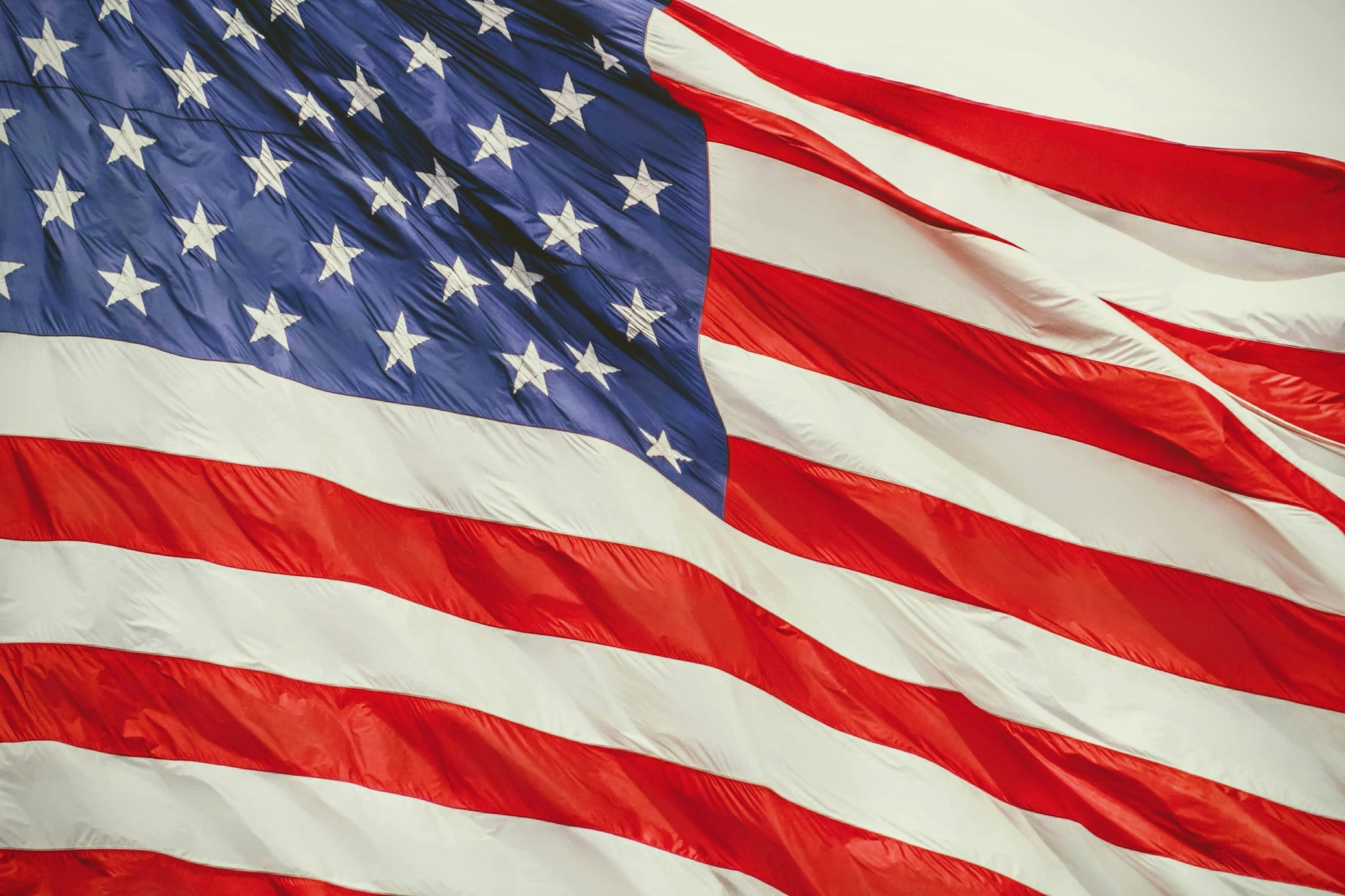
Y'all, there's something about the Fourth of July that gets me every single time. Maybe it's the smell of a grill or the flag waving on the neighbor's porch, or spending time with family. But underneath all of it, I keep coming back to the same thought: faith and freedom have been tangled up together in this country since the very beginning, and honestly, they still are.
Faith at the Founding
Here's the thing: our founders weren't all cut from the same theological cloth. They argued about plenty, faith included. But when you read the Declaration of Independence, you can't miss it: our rights were named as coming from a Creator, not a king. That was radical. It meant no government got the final word on human dignity; God did.
The Continental Congress called for days of prayer and fasting in the middle of the fight for independence. Not because they had it all figured out, but because they knew they didn't. They were regular, flawed people asking for help far bigger than themselves. I find a lot of comfort in that. I feel that way most Sunday nights before a Monday of AP Seminar papers, if I'm honest. [1]
The Women Who Shaped a Nation
We don't always hear about them in the fireworks-and-founding-fathers version of the story, but women were doing the quiet, hard work that held the Revolution together. They organized boycotts of British goods and made their own cloth so families didn't have to depend on the crown for so much as a spool of thread, which, as a fellow fiber person, I think about more than you'd expect.[2]
Women raised money for soldiers, nursed the wounded, ran farms and businesses while husbands and sons were away, and some even carried messages behind enemy lines. None of it made the textbooks the way Lexington and Concord did, but none of it happened without them, either.[3]
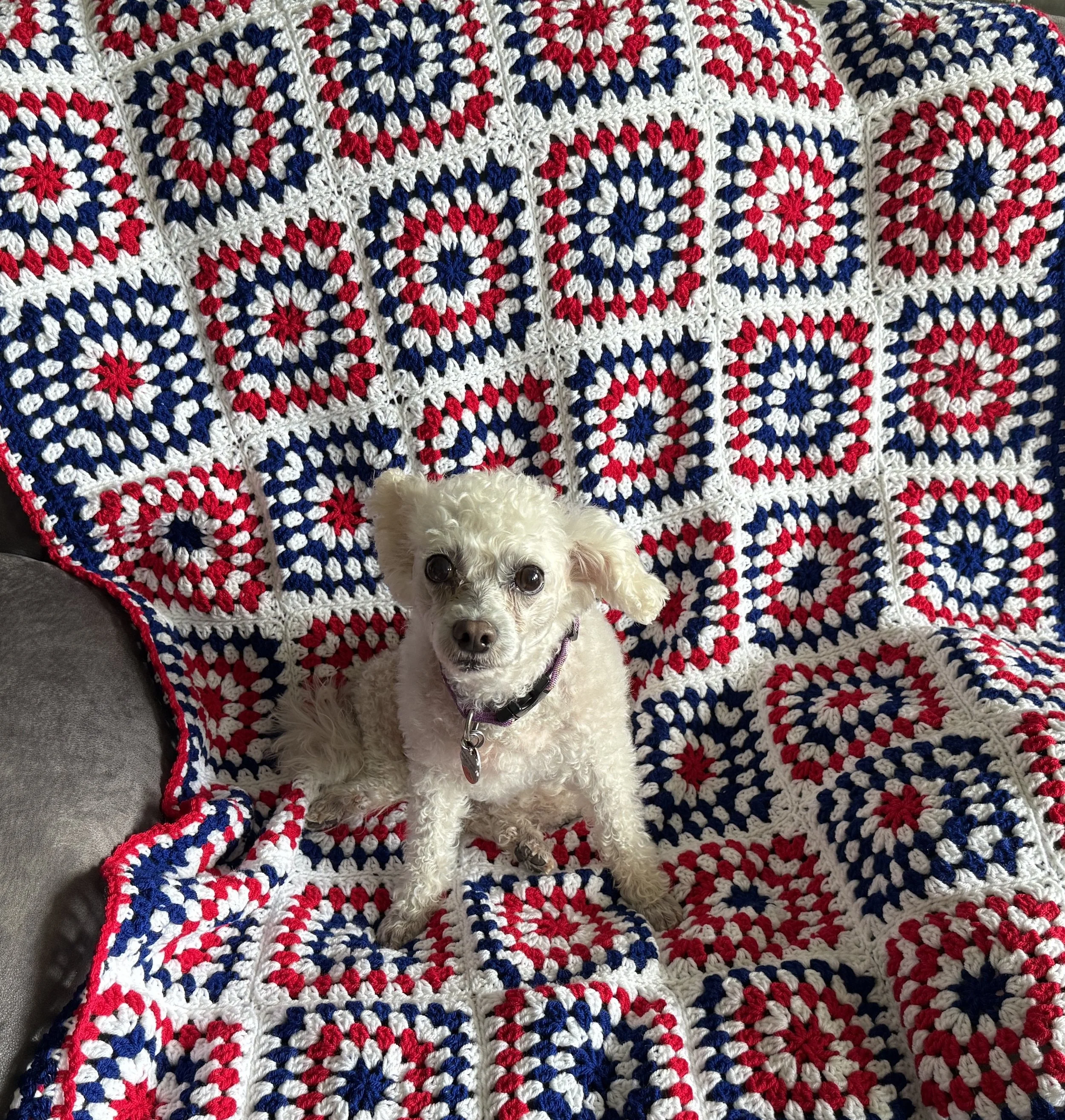
Emme enjoying the Colors of America Throw
Remember the Ladies
Of everyone from that era, Abigail Adams is the one I come back to most. While her husband John was off helping draft what would become the Declaration of Independence, she was managing their farm, raising their children, and writing him letters that were sharper and more forward-thinking than most of what came out of Philadelphia that year.
In March of 1776, she wrote him this:
"I desire you would Remember the Ladies, and be more generous and favourable to them than your ancestors. Do not put such unlimited power into the hands of the Husbands. Remember all Men would be tyrants if they could." [4]
John didn't take her up on it; not then, anyway. But Abigail knew exactly what she was doing. She was naming an unfinished part of the American promise out loud, more than a hundred years before women could vote. That takes a particular kind of faith: believing a thing is true and right long before the world around you agrees.
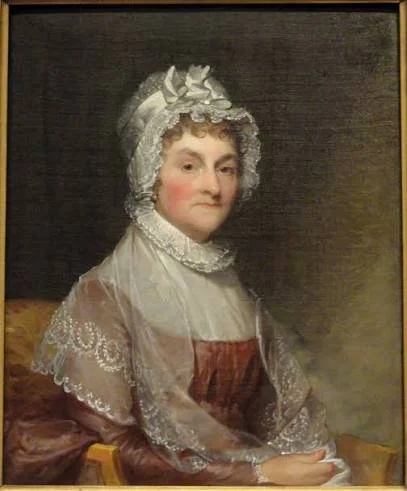
Abigail Adams by Gilbert Stuart - National Gallery of Art, Washington
Faith and Freedom, Woven Together
That's really the thread running through all of it for me. Faith isn't just a private, quiet thing tucked away from the rest of life; it's what gave people the courage to ask for a better country than the one they were handed. It's what let Abigail Adams put pen to paper and say the quiet part loud. It's what got a rag-tag group of colonists through a war they had no business winning.
This Fourth of July, I hope you get some good porch time, a plate of something delicious, and maybe a few stitches in between the fireworks. But I also hope you take a minute to remember the ones, especially the women, whose faith and grit we're all still benefiting from.
"Blessed is the nation whose God is the LORD."
—Psalm 33:12
Happy Fourth of July, y'all.
Ariana 🧶
Notes
U.S. House of Representatives, Office of the Historian, "Days of Fasting, Days of Thanksgiving" (history.house.gov); Library of Congress, Religion and the Founding of the American Republic exhibit (loc.gov).
HISTORY.com, "9 Heroic Women of the American Revolution" (history.com).
HISTORY.com, "9 Heroic Women of the American Revolution," on Lydia Darragh (history.com); American Battlefield Trust, "The Ladies Association of Philadelphia" (battlefields.org).
Abigail Adams to John Adams, March 31, 1776, Founders Online, National Archives (founders.archives.gov); Massachusetts Historical Society, Adams Papers Digital Edition (masshist.org)
